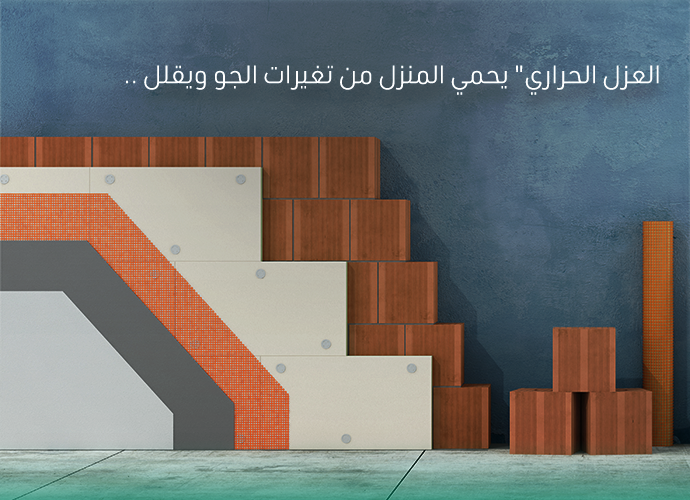
Thermal insulation protects the house from weather changes and reduces electricity consumption
Thermal Insulation is defined as the reduction of heat transfer through the building parts, especially (walls, ceiling, and windows) and its external elements, whether from indoors to outdoors as in winter (heat loss), or from outdoors to indoors as in summer (heat gain).
SEEC stated that “measuring energy efficiency in thermal insulation materials is made by identifying the thermal transmittance of all external building parts. This is scientifically known as (U-Value). The lower the U-Value, the higher the energy efficiency of the building material.
SEEC explained that using thermal insulation in buildings contributes to the reduction of electrical power consumed by air conditioners and heaters by 30 to 40%. Using reflective double-paned windows reduces up to 5% of the air conditioner’s consumption of heat.
SEEC advised landlords to use light external colors on the building because they reduce heat absorption (heat gain).
SEEC also emphasized that the cost of thermal insulation in buildings (walls – ceilings – windows), according to recent studies, represents 3-5% of the total cost of the entire building. This is an acceptable cost due to the advantages that would be reflected on the citizen and the country as a result of the application of the thermal insulation and circulating its use.
According to experts, the application of thermal insulation in buildings is important as it helps to maintain moderate temperatures for a long period inside the building. This in turn leads to fewer hours of air conditioners or heaters. It would have an impact on the consumption value of the electricity bill. It reduces also high costs of operation and maintenance, extends the lifetime of household appliances and furniture as well as the entire building, reduces structural cracks, increases fire rating, reduces structural loads due to the light materials used in thermal insulation, and protects the environment.